
Understanding Students’ Digital Behaviour and Its Impact on Learning
Understanding students’ digital behaviour helps identify how screen time, distractions, and device usage patterns affect learning and focus.
Introduction
Digital technology has become an inseparable part of students’ lives. Smartphones, laptops, and tablets are now used not only for communication and entertainment but also for studying, completing assignments, and accessing educational resources. While these tools provide convenience and learning opportunities, they have also introduced new challenges related to students’ digital behaviour.
Many students spend several hours each day on digital devices, often switching between social media platforms, messaging apps, short-form videos, and academic tasks. Over time, this constant digital engagement can begin to influence how students concentrate, process information, and manage their study habits.
Understanding students’ digital behaviour has therefore become increasingly important. By examining how students interact with technology, educators and learners can better understand the impact of digital habits on attention, productivity, and academic performance.
The Rise of Digital Consumption Among Students
In recent years, students’ screen time has increased significantly. Smartphones provide instant access to information, entertainment, and social interaction, making them one of the most frequently used tools among young people.
Students often rely on digital devices for:
- Accessing online learning platforms
- Researching assignments
- Communicating with classmates and teachers
- Watching educational content
- Entertainment through social media and streaming platforms
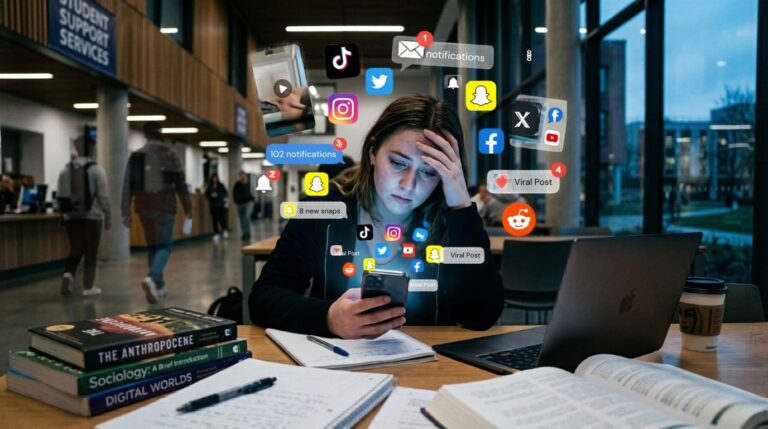
However, the same devices that support learning can also become sources of constant distraction. Notifications, social media feeds, and algorithm-driven content compete for students’ attention, making it difficult to stay focused on academic work for long periods.
This environment encourages frequent task-switching, where students move quickly between study materials and unrelated digital content.
Understanding Students’ Digital Behaviour
Digital behaviour refers to how individuals interact with technology in their daily lives. For students, this includes patterns such as:
- How frequently they check their phones
- How long they spend on different digital platforms
- Whether devices are used mainly for learning or entertainment
- How often distractions interrupt study sessions
Many students believe their digital habits are balanced. However, when they actually monitor their screen time, they often discover that a large portion of their day is spent on unproductive digital activities.
This does not necessarily happen intentionally. Digital platforms are designed to capture attention through endless content, notifications, and personalized recommendations.
Why Students Spend So Much Time on Digital Platforms
1. Instant Entertainment and Relaxation
After long hours of classes or study sessions, students often turn to social media or short videos for quick relaxation. These platforms provide immediate entertainment and require minimal effort.
2. Habitual Phone Checking
Notifications and constant updates encourage students to check their phones frequently. Over time, this behaviour becomes habitual.
3. Fear of Missing Out (FOMO)
Social media creates a strong desire to stay updated with trends, conversations, and social interactions, keeping students engaged throughout the day.
4. Academic Work Leading to Digital Distraction
Students often begin using devices for academic purposes but end up getting distracted by unrelated content once they are online.
The Impact of Digital Behaviour on Learning
Reduced Attention Span
Continuous exposure to fast-paced digital content can make it harder for students to focus on activities that require sustained attention.
Interrupted Study Sessions
Frequent switching between study and digital platforms fragments learning and reduces efficiency.
Mental Fatigue
Extended screen time can lead to mental exhaustion, making it difficult to engage in deeper academic thinking.
Procrastination and Time Mismanagement
Digital distractions can easily lead to procrastination, where students spend more time on entertainment than intended.

The Importance of Digital Awareness
Many students are not fully aware of their digital habits. Because device usage is integrated into everyday life, excessive digital consumption often goes unnoticed.
Developing awareness is the first step toward healthier digital behaviour. When students start observing their own patterns, they can better understand how these habits influence their focus and productivity.
Understanding Your Digital Behaviour
Before making drastic changes such as completely avoiding social media or attempting a full digital detox, it is important for students to understand their relationship with technology.
A Digital Behaviour Assessment Test can help students evaluate their digital habits in a structured way. Instead of focusing only on screen time, such assessments examine behavioural patterns such as:
- Device checking frequency
- Distraction levels
- Impact on productivity
Building Healthier Digital Habits
The goal is not to eliminate technology but to use it more mindfully. Students can:
- Set specific times for checking social media
- Keep phones away during study sessions
- Use devices mainly for academic purposes
- Take regular breaks from screens
- Engage in offline activities like reading or sports
Conclusion
Digital technology offers immense benefits for education and communication. However, the way students interact with these tools plays a crucial role in shaping their learning habits.
By becoming more aware of their digital behaviour, students can develop a healthier relationship with technology and improve their focus, productivity, and academic performance.
Take the First Step: Assess Your Digital Behaviour
Understanding your digital habits is the first step toward improvement. Many students are unaware of how often they check their phones or how distractions affect their learning.
The Digital Behaviour Assessment helps you:
- Understand your screen habits
- Identify distractions
- Improve focus and productivity
👉 Take the assessment:
https://rallivikainsights.com/digital-detox-free-plan/
Get Deeper Insights with the Premium Assessment
For a more detailed analysis, the Premium Digital Behaviour Assessment provides:
- Comprehensive behaviour analysis
- Deeper insights into distraction patterns
- Personalized recommendations
👉 Upgrade here:
https://rallivikainsights.com/premium-digital-behavior-report-india/