
Digital Behavior in India: Why Screen Time Is Becoming a Growing Concern
📌 Introduction
India is one of the fastest-growing digital markets in the world. With affordable smartphones and low-cost internet, millions of people stay connected throughout the day—from metro cities to small towns.
However, the real concern is not just increasing screen time—it’s how people are using digital devices.
Most usage today is not intentional. It is automatic.
People check their phones without thinking, scroll endlessly, and switch between apps frequently. Over time, this behaviour starts affecting focus, productivity, sleep, and mental well-being.
Understanding digital behavior in India has become more important than ever.
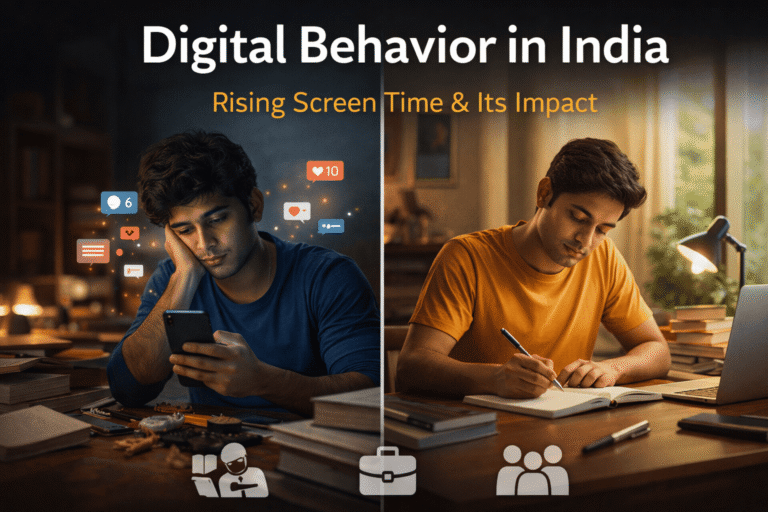
📊 Rising Screen Time in India
India has over 700+ million smartphone users, and average screen time has increased significantly in recent years.
In many households:
- Students spend hours on online classes and social media
- Professionals attend continuous virtual meetings
- Families scroll through reels late at night
- Teenagers spend long hours on gaming apps
Digital access has created opportunities—but it has also increased digital dependency.
🎓 Impact on Students
Students in India, especially those preparing for competitive exams like JEE, NEET, and UPSC, already face high academic pressure.
Along with this:
- Social media distractions
- Late-night scrolling
- Continuous YouTube consumption
- Gaming habits
These patterns lead to:
- Reduced focus
- Poor sleep quality
- Lower study productivity
- Mental fatigue
👉 The issue is not just usage—it’s unaware digital behaviour
💼 Impact on Working Professionals
For professionals in India’s fast-paced work culture:
- Back-to-back meetings
- Constant notifications (WhatsApp, email)
- Work-from-home routines
This creates a cycle of digital overload.
Over time, it leads to:
- Reduced productivity
- Poor decision-making
- Mental exhaustion
- Work-life imbalance
👨👩👧 Impact on Families
In many Indian households:
- Phones are used during meals
- Conversations get interrupted
- Screen time replaces real interaction
This weakens:
- Family bonding
- Communication
- Emotional connection
⚠️ The Real Problem: Lack of Awareness
The biggest challenge is not screen time—it’s lack of awareness.
Most people don’t know:
- How often they check their phone
- What triggers their behaviour
- How much time they actually spend online
👉 Without awareness, change is not possible.
🚀 Start With Digital Behaviour Assessment
Before trying to reduce screen time or improve habits, the first step is to understand your digital behaviour.
👉 Take Your Free Digital Behaviour Assessment
The Rallivika Digital Behaviour Assessment helps you:
✔ Understand your screen usage patterns
✔ Identify distraction triggers
✔ Recognize attention-draining habits
✔ Build awareness about your digital lifestyle
🎯 Start Your Free Assessment
🧠 Why Awareness Changes Everything
When you understand your habits:
- You use technology with purpose
- You reduce unnecessary distractions
- You improve focus and clarity
- You build better daily routines
Small awareness leads to powerful improvement.
🚀 Upgrade to Personalized Digital Behaviour Report
If you want deeper insights and long-term improvement:
💡 Premium Digital Behaviour Report Includes:
✔ Detailed behaviour analysis
✔ Personalized recommendations
✔ Focus improvement strategy
✔ Screen discipline plan
✔ Insights based on real lifestyle patterns
🎯 Get Your Personalized Report
🔥 Why Personalized Reports Matter
General advice like:
- “Use phone less”
- “Avoid distractions”
Doesn’t work effectively.
Because every person has:
- Different habits
- Different triggers
- Different routines
👉 Personalized insights make improvement practical and sustainable.
❓ Frequently Asked Questions (FAQ)
Is digital behaviour a growing concern in India?
Do students in India face digital distractions?
Is high screen time always harmful?
What is digital behaviour assessment?
Can digital habits be improved?
Stay Connected with Rallivika Insights
Get practical tips, digital behaviour insights, and productivity updates by following us on social platforms: