
Digital Behavior of Students: The Habit That’s Shaping a Generation
📌 Introduction
Students today are constantly connected. From online classes to social media and entertainment, digital devices are now a core part of daily life.
But the real issue is not how much students use technology—it’s how they use it.
Most digital usage today is not conscious. It’s automatic.
A student opens their phone without thinking, scrolls without purpose, and switches between apps without realizing how much time has passed. Over time, this shift from intentional use to habitual behavior starts affecting focus, productivity, and mental clarity.
Understanding students digital behaviour is now more important than ever.
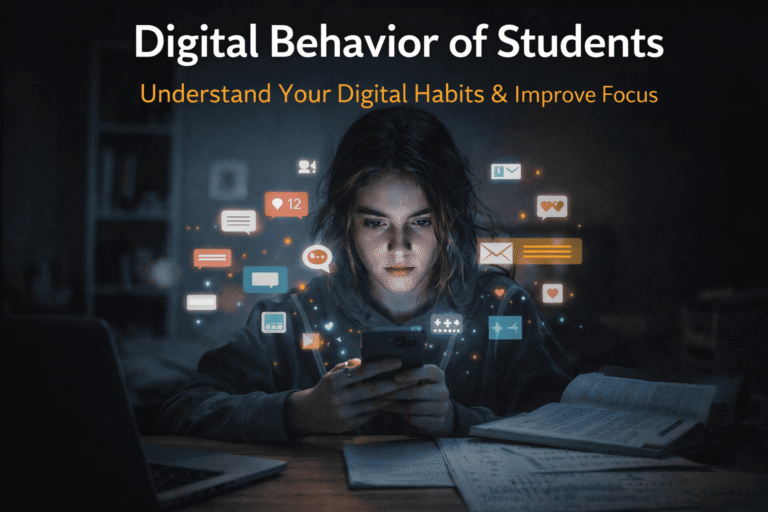
📊 What Is Students Digital Behaviour?
Digital behaviour refers to how students interact with technology on a daily basis.
This includes:
- How often they check their phone
- How long they spend on apps
- What type of content they consume
- How frequently they get distracted
Today, this behaviour is influenced by:
- Instant notifications
- Endless scrolling
- Algorithm-driven content
- Social validation
Over time, these patterns become automatic—and often go unnoticed.
⚠️ The Real Problem: Unaware Digital Behaviour
Many students believe they are using their devices in a balanced way.
But in reality:
- Phone checking becomes habitual
- Scrolling happens without purpose
- Study sessions get interrupted frequently
This is called unaware digital behaviour.
👉 The biggest issue is not screen time
👉 It’s the lack of awareness
🎯 Why This Matters for Students
Uncontrolled digital habits directly affect learning:
🔻 Reduced Attention Span
Constant switching between apps reduces focus ability.
🔻 Lower Productivity
Time is spent on distractions instead of meaningful work.
🔻 Mental Fatigue
Continuous digital stimulation exhausts the brain.
🔻 Poor Study Performance
Interruptions reduce retention and understanding.
🔍 The Core Issue: Lack of Awareness
Most students don’t know:
- How often they check their phone
- What triggers their behaviour
- How much time they actually spend online
Without awareness, improvement is not possible.
👉 You cannot improve what you don’t measure.
🚀 Take the First Step: Digital Behaviour Assessment
Before trying to reduce screen time or improve focus, the first step is to understand your digital behaviour.
👉 Take Your Free Digital Behaviour Assessment
The Rallivika Digital Behaviour Assessment helps you:
✔ Understand your screen usage patterns
✔ Identify distraction triggers
✔ Recognize attention-draining habits
✔ Measure your focus level
🎯 Start Your Free Assessment
🧠 What Happens After Awareness?
Once you understand your digital habits, you can:
- Use technology with purpose
- Reduce unnecessary distractions
- Improve focus during study time
- Build better daily routines
Small awareness leads to powerful changes.
🚀 Upgrade to Personalized Digital Behaviour Report
If you want deeper insights and real improvement:
💡 Premium Digital Behaviour Report Includes:
✔ Detailed behaviour analysis
✔ Personalized recommendations
✔ Focus improvement strategy
✔ Screen discipline plan
✔ Long-term habit improvement roadmap
🎯 Get Your Personalized Report
🔥 Why Personalized Reports Matter
General advice like:
- “Use phone less”
- “Avoid distractions”
Doesn’t work long-term.
Because every student has:
- Different habits
- Different triggers
- Different routines
👉 That’s why personalized insights are powerful.
❓ Frequently Asked Questions (FAQs)
What is digital behaviour in students?
Why is digital behaviour important?
Is high screen time always bad?
What is unaware digital behaviour?
How can students improve their habits?
Stay Connected with Rallivika Insights
Get practical tips, digital behaviour insights, and productivity updates by following us on social platforms:
Follow us on Instagram
Join us on Facebook
Connect on LinkedIn